
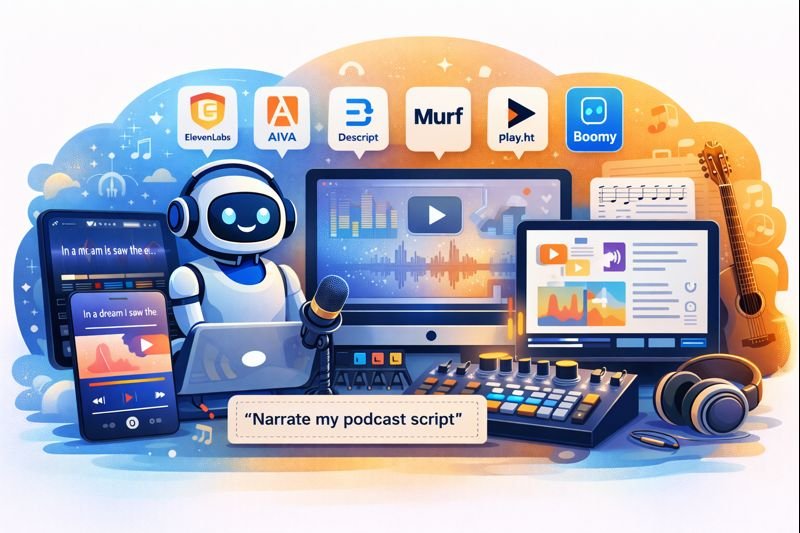
AI tools for audio generation are transforming the way creators, podcasters, musicians, and businesses produce high-quality sound content. In 2026, advanced platforms can generate realistic voiceovers, music, sound effects, and even full podcasts from text, scripts, or simple prompts — reducing production time and cost while increasing creative flexibility.
This article explores the best AI tools for audio generation in 2026, what they excel at, and how to choose the right one for your needs.
Why AI Audio Generation Matters
Audio content continues to grow in popularity across podcasts, audiobooks, advertisements, video soundtracks, and UX design. However, traditional audio production often requires expensive equipment, vocal talent, and editing expertise.
AI audio generators help creators by automating:
- Voiceover production with natural-sounding narration
- Music composition and soundtracks
- Text-to-speech conversion with customizable voices and accents
- Sound effect creation and audio enhancement
These tools are increasingly used by content creators, educators, game developers, and brands to scale audio production without compromising quality.
Top AI Audio Generation Tools in 2026
1) ElevenLabs
Best for: Human-like voiceovers and text-to-speech.
ElevenLabs is known for producing some of the most natural and expressive AI voices available. It’s widely used for narration, audiobooks, podcasts, and voice integrations in apps. Users can customize pitch, tone, pacing, and emotional expression.
- Pros: Realistic voice quality; customizable voices
- Cons: Advanced features may require higher-tier plans
2) Descript
Best for: Audio editing with text-based workflows.
Descript combines audio generation with advanced editing capabilities. You can edit audio by editing text, generate filler words, and remove pauses automatically. It’s particularly useful for podcasters and long-form spoken content creators.
- Pros: Easy transcript-based editing; built-in sound cleanup
- Cons: Not a standalone composer of music or sound effects
3) Soundraw
Best for: AI-generated background music and soundtracks.
Soundraw creates custom music tracks by genre, mood, and duration. It’s ideal for video creators, game developers, and brands who need royalty-free music tailored to their projects.
- Pros: Music customization; royalty-free outputs
- Cons: Music quality varies by genre and complexity
4) Murf AI
Best for: Voiceovers for business and marketing content.
Murf AI offers a range of professional voices suitable for e-learning, explainer videos, ads, and presentations. Its intuitive interface makes voice selection and editing accessible even for non-professional editors.
- Pros: Professional voice library; user-friendly studio
- Cons: Advanced features require paid plans
5) AIVA
Best for: AI-composed music and soundtracks.
AIVA focuses on music composition across styles such as orchestral, cinematic, and ambient. It’s commonly used by creators who want custom scores without hiring composers.
- Pros: Diverse musical styles; easy export options
- Cons: Limited control over orchestration complexity
6) Play.ht
Best for: Text-to-speech voice generation for content and accessibility.
Play.ht specializes in converting written content into natural audio. It’s widely used for blog narration, accessibility features, news readings, and podcast previews.
- Pros: Wide variety of voices; simple text-to-speech workflow
- Cons: Less customization than some advanced platforms
7) Boomy
Best for: Quick music generation for creators.
Boomy allows users to create entire songs within minutes by selecting a style and mood. It’s especially popular among aspiring musicians and content creators who want royalty-free tracks for videos and streaming without deep music theory knowledge.
- Pros: Fast song creation; beginner-friendly
- Cons: Less control over composition nuances
How to Choose the Best AI Audio Tool
Match Your Output Goals
Choose based on the type of audio content you need:
- Natural narration or podcast voiceovers: Tools with advanced text-to-speech voices (ElevenLabs, Play.ht)
- Audio editing with AI workflows: Tools that combine generation and editing (Descript)
- Original music and soundtracks: AI composers (Soundraw, AIVA, Boomy)
- Professional marketing voiceovers: Platforms with polished voice libraries (Murf AI)
Check Licensing and Usage Terms
Some platforms allow commercial usage of generated audio by default, while others require specific licensing or subscription tiers for full commercial rights. Always review terms if you plan to use audio in monetized content.
Conclusion
AI audio generation tools in 2026 have matured into versatile platforms serving content creators, marketers, podcasters, musicians, and brands. From realistic voiceovers and podcast narration to fully generated music tracks, these tools help you produce high-quality audio faster and more affordably.
Understanding your needs — whether voice realism, music composition, or editing workflows — will help you choose the right tool and scale your audio content production effectively.