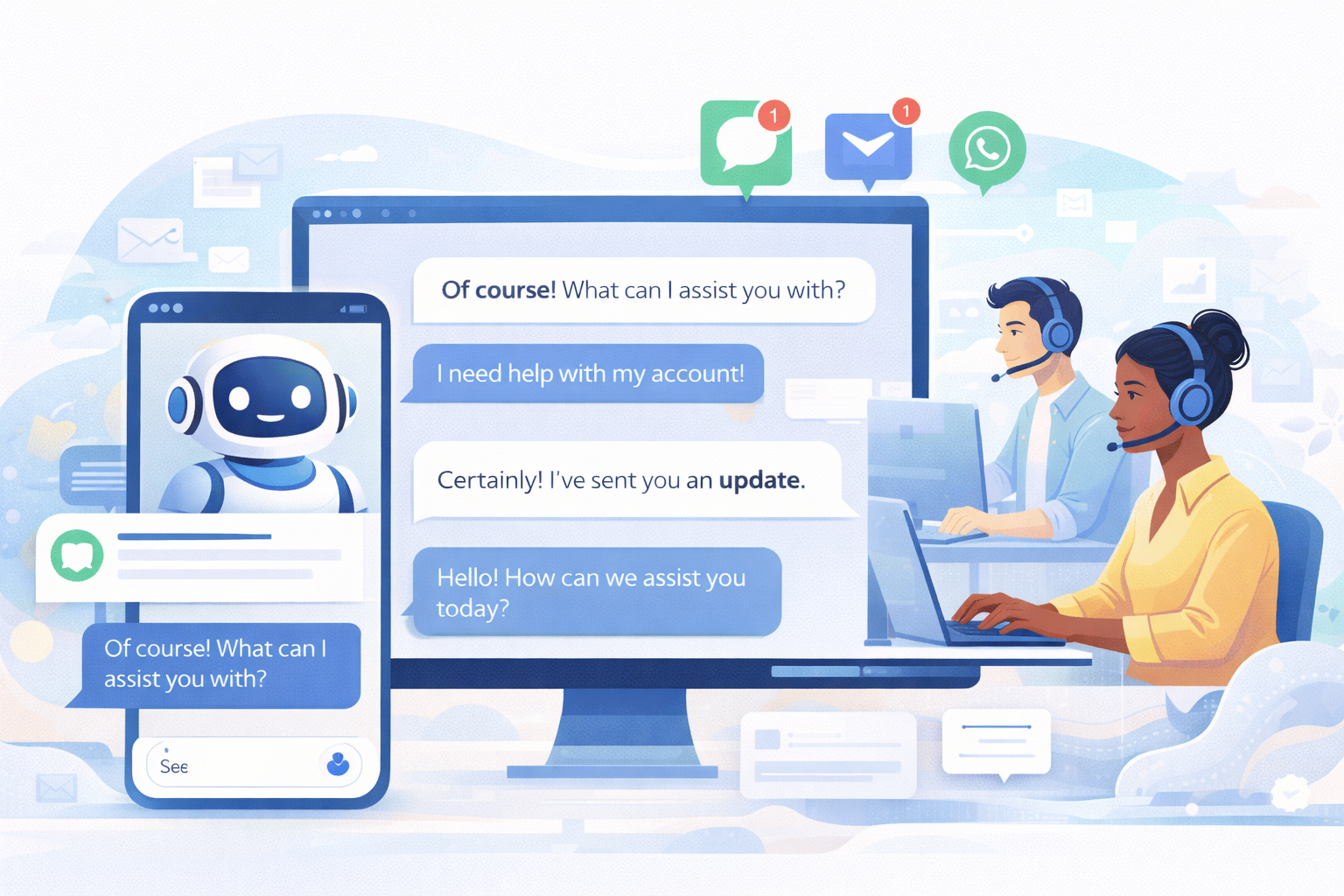
Customer support has evolved from reactive ticket handling to proactive, always-on assistance. In 2026, AI-powered chatbots and virtual assistants are central to delivering fast, accurate, and personalized support across chat, email, voice, and in-app experiences.
Modern AI support tools don’t just answer FAQs. They resolve issues, summarize conversations, route tickets intelligently, assist human agents, and learn continuously from customer interactions. This guide covers the best AI tools for customer support in 2026, what they’re best at, and how to choose the right solution for your organization.
Why AI Is Essential for Customer Support in 2026
Customer expectations have changed. Users expect instant responses, 24/7 availability, and consistent answers across channels. At the same time, support teams face higher volumes, more complex issues, and pressure to control costs.
AI helps support teams by:
- Handling common questions instantly without human intervention
- Reducing ticket volume through self-service and automation
- Assisting agents with summaries, suggested replies, and knowledge retrieval
- Improving response time, consistency, and customer satisfaction
The Best AI Tools for Customer Support in 2026
1) Intercom (with AI)
Best for: AI-powered chat support for SaaS and digital businesses.
Intercom combines live chat, automation, and AI agents to handle customer conversations across the lifecycle. Its AI features resolve common issues, qualify conversations, and assist human agents with context-aware suggestions.
- Pros: Strong conversational AI; seamless human handoff
- Cons: Premium pricing at scale
2) Zendesk (AI-powered support)
Best for: Enterprise-grade ticketing and omnichannel support.
Zendesk uses AI to automate ticket classification, suggest replies, summarize conversations, and power self-service bots. It works across email, chat, voice, and social channels.
- Pros: Mature platform; strong analytics and routing
- Cons: Setup complexity for smaller teams
3) Freshdesk (with Freddy AI)
Best for: SMB and mid-market customer support teams.
Freshdesk’s Freddy AI helps automate responses, recommend solutions, and assist agents with ticket summaries. It’s designed to be easier to deploy than enterprise-heavy systems.
- Pros: Good balance of power and usability
- Cons: Fewer advanced customization options
4) Ada
Best for: No-code AI chatbots for customer self-service.
Ada allows support teams to build and deploy AI chatbots without writing code. It focuses on deflecting tickets by resolving issues directly within chat and messaging apps.
- Pros: Easy bot creation; strong deflection rates
- Cons: Limited for complex backend workflows
5) Tidio
Best for: Small businesses and ecommerce support.
Tidio combines live chat with AI bots that handle FAQs, order status questions, and basic customer inquiries. It’s popular with online stores and small teams.
- Pros: Quick setup; affordable pricing
- Cons: Less suitable for complex B2B support
6) Drift
Best for: Conversational support blended with sales.
Drift uses AI chatbots to qualify users, answer questions, and route high-intent conversations to sales or support teams. It’s commonly used by B2B companies with revenue-driven support workflows.
- Pros: Strong conversational flows; revenue alignment
- Cons: More sales-focused than pure support tools
7) Help Scout (with AI assist)
Best for: Human-centric support teams using AI assistance.
Help Scout emphasizes a personal support experience, with AI features that assist agents rather than replace them. AI helps with drafting replies, summarizing threads, and searching the knowledge base.
- Pros: Clean UX; great for thoughtful support teams
- Cons: Limited chatbot automation compared to others
Chatbots vs AI Assistants: What’s the Difference?
In 2026, most support stacks include both:
- AI chatbots: Customer-facing bots that answer questions and resolve issues automatically
- AI assistants: Agent-facing tools that summarize tickets, suggest replies, and surface knowledge
The most effective setups combine both — letting bots handle repetitive issues while AI assistants make human agents faster and more consistent.
How to Choose the Right AI Support Tool
Match the tool to your support complexity
- High-volume, simple queries: Self-service chatbots (Ada, Tidio)
- Omnichannel support: Full platforms (Zendesk, Freshdesk)
- Conversational experiences: Chat-first tools (Intercom, Drift)
Check integrations and data access
Strong AI support tools integrate with your CRM, product data, order systems, and knowledge base. Without access to the right data, AI responses quickly break down.
Prioritize control and human fallback
AI should enhance trust, not erode it. Ensure there’s always a clear path to a human agent and the ability to review and refine AI responses.
Best Practices for Using AI in Customer Support
- Start with FAQs and common issues before expanding automation
- Continuously review AI responses for accuracy and tone
- Train bots using real support conversations
- Be transparent with customers when they’re interacting with AI
Conclusion
The best AI tools for customer support in 2026 help teams deliver faster responses, reduce workload, and maintain a high-quality customer experience. From self-service chatbots to agent-assist tools, AI now supports every layer of modern customer support.
The winning approach is not replacing humans, but combining AI automation with skilled support teams — creating a system that scales without losing empathy or trust.